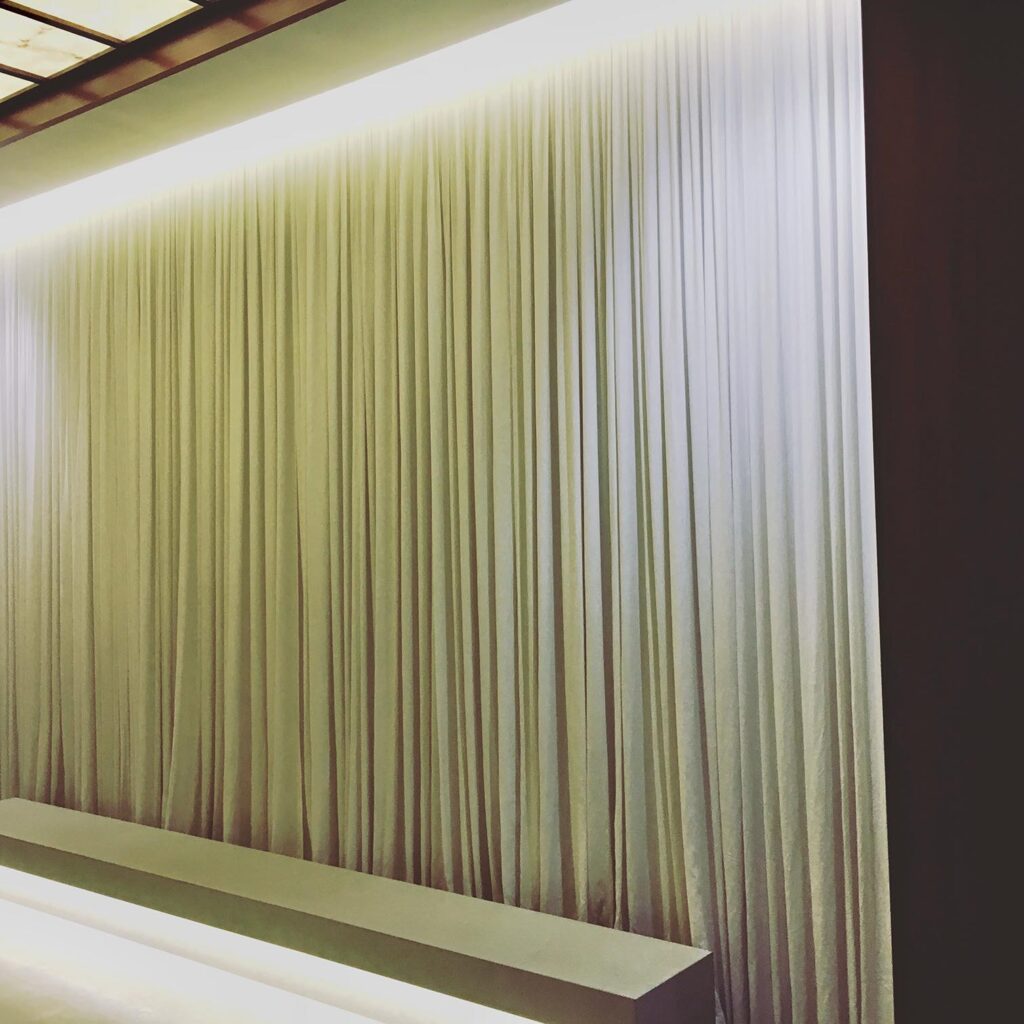
Windows in New York City come in every shape and setting. A pre-war apartment on the Upper West Side has tall windows with radiators below, while a new tower in Hudson Yards has walls of glass from floor to ceiling. A Tribeca loft may have oversized industrial windows under a high ceiling. Each of these spaces calls for a different kind of drape, and the header style you choose shapes how the whole room looks and works.
Pinch pleat and ripple fold are the two most popular styles for custom drapes in NYC, and each one fits certain windows better. Pinch pleat drapes suit pre-war apartments, brownstones, and formal rooms where a tailored, classic look feels right. Ripple fold drapes suit modern condos, lofts, and floor-to-ceiling glass, where clean, even waves and a compact stack keep the view open. Your ceiling height, window width, decor, and whether you want motorization all help decide which one works best.
Pinch Pleat vs. Ripple Fold Drapes Side by Side
Both styles are made to measure and can use the same fabrics and linings. The real differences show up in the header, the hardware, and how the drapes look open and closed. This comparison lays them out:
| Feature | Pinch Pleat Drapes | Ripple Fold Drapes |
| Header look | Fabric gathered into sewn pleats at the top | Flat panel that forms soft, even S-shaped waves |
| Overall style | Classic, tailored, and formal | Clean, modern, and minimal |
| Hardware | Decorative rod with rings, or a track with hooks | Track with snap carriers that set the wave spacing |
| Fabric use | More fabric for the same window | Uses less fabric than pleated styles |
| Stack when open | Takes more wall space beside the window | Stacks tighter at the ends of the track |
| Fold consistency | Pleats can shift and need occasional dressing | Carriers keep every wave evenly spaced |
| Cleaning | Sewn pleats need care when cleaning and pressing | Flat panels are simple to clean and press |
| Mounting | Wall or ceiling | Wall or ceiling, hanging below the track |
| Lining options | Sheer, light-filtering, or blackout | Sheer, light-filtering, or blackout |
What Pinch Pleat Drapes Bring to a Room
Pinch pleats have been a staple of formal interiors for generations. Fabric is gathered into groups of folds and stitched at the top, which creates structured columns that fall from the rod. These strengths make them a strong choice:
- Tailored Look: Sewn pleats give a crisp, finished header that suits traditional and transitional rooms.
- Style Variety: Double, triple, and Euro pleat versions let you shift the look from relaxed to formal.
- Decorative Hardware: Pinch pleats hang well from exposed rods with rings, which lets finials and hardware add to the design.
- Depth and Texture: The gathered folds add visual weight that works well in large rooms with high ceilings.
- Heavier Fabrics: Velvets, lined silks, and interlined drapes hold their shape well in pleats.
What Ripple Fold Drapes Bring to a Room
Ripple fold drapes use flat panels with snap tape sewn along the top. The panels snap onto carriers in a track, and the spacing between carriers creates a smooth, continuous wave. Kirsch, which invented and trademarked the system, says that Ripplefold uses up to 25% less fabric than pleated drapes and has a smaller stackback, with fold and carrier spacing that stays consistent. These strengths make Ripplefold a strong choice:
- Uniform Waves: Every fold looks the same from inside the room and from the street.
- More Glass Exposed: A tight stack leaves more of the window open when the drapes are pulled back.
- Easier Care: Kirsch’s manual states that Ripplefold drapes are perfectly flat, which makes laundering, cleaning, and pressing easier.
- Clean Lines: The track tucks close to the ceiling or wall, which suits minimal interiors.
How Fullness Changes the Ripple Fold Look
Fullness on ripple fold drapes is set by carrier spacing. Kirsch’s fabrication guide lists carrier spacing options that provide 120%, 100%, 80%, or 60% drapery fullness. This shows how the choice affects the finished drape:
| Fullness | Wave Look | Best For |
| 120% | Smaller, richer waves | Luxe living rooms and bedrooms |
| 100% | Balanced, classic waves | Most homes and apartments |
| 80% | Wider, softer waves | Sheers and lighter fabrics |
| 60% | Widest, flattest waves | Tight spaces needing the smallest stack |
Matching Custom Drapes in NYC to Your Window Type
New York’s building types shape which drapery style looks and works best. This guide matches common NYC windows with the style that usually fits:
| NYC Window or Space | Best Fit | Why It Works |
| Pre-war apartment with radiators | Pinch pleat | Classic pleats suit molding and tall windows, and ceiling-mount hardware keeps fabric clear of radiators |
| Brownstone or townhouse | Pinch pleat | Formal parlor rooms and high ceilings suit tailored, structured pleats |
| Loft with tall industrial windows | Ripple fold | Long tracks cover wide spans, and even waves suit exposed brick and open plans |
| New condo with floor-to-ceiling glass | Ripple fold | A compact stack keeps views open, and ceiling tracks give a clean line |
| Small studio or one-bedroom | Ripple fold | Less stack beside the window frees up wall space and light |
| Bedroom needing blackout | Either style | Blackout lining works with both headers |
| Salon, office, or restaurant | Ripple fold | Consistent folds look neat across long runs of windows |
Many NYC homes mix both styles, such as ripple fold in a glassy living room and pinch pleat in a formal dining room. We’ve installed blackout pinch pleat drapes on a custom track system in a Chelsea apartment and sheer ripple fold drapes on West 24th Street, which shows how each style fits a different kind of space.
How Each Style Works With Motorization
Motorized drapes are popular in NYC homes with tall windows, wide spans, or hard-to-reach glass, and both styles can be motorized. Somfy’s Glydea ULTRA motor can be used with Pinch Pleat, RippleFold, and Accordia-type curtains. The difference comes down to hardware:
- Ripple Fold: Already runs on a track, which makes adding a motor a natural step.
- Pinch Pleat: Moves from a decorative rod to a motorized track with hooks, which changes the look of the hardware.
- Planning Ahead: Choosing motorization before ordering helps set the right track, fullness, and mounting from the start.
Manhattan Shades installs Somfy motors and hardware for motorized drapes, and we also repair Somfy motors. Give us a call to book your service.
How to Decide Between the Two Styles
A few quick answers narrow the choice when ordering custom drapes in NYC. Think through these before your consultation:
- Room Style: Classic rooms lean toward pinch pleat, while modern rooms lean toward ripple fold.
- Window Width: Wide spans and window walls favor ripple fold tracks.
- Wall Space Beside the Window: Tight walls favor the smaller stack of ripple fold.
- Radiators or AC Units Below: Ceiling mounting and the right length keep fabric clear of both, with either style.
- Hardware Preference: Decorative rods and finials favor pinch pleat, while hidden tracks favor ripple fold.
- Motorization Plans: Both styles work, but ripple fold is built on a track from the start.
Frequently Asked Questions
What is the difference between pinch pleat and ripple fold drapes?
Pinch pleat drapes have fabric gathered into sewn pleats at the top, which creates a tailored, classic look. Ripple fold drapes use flat panels that snap onto track carriers and form even, S-shaped waves with a modern feel.
Which is more modern, pinch pleat or ripple fold?
Ripple fold is the more modern style. Its uniform waves and clean track suit contemporary condos, lofts, and minimal interiors. Pinch pleat reads as more traditional, though Euro and double pleats can feel more updated.
Which style costs more?
Costs depend on fabric, size, lining, and hardware. Ripple fold uses less fabric than pleated drapes and needs only straight hemming, while pinch pleats take more fabric and sewing. Ripple fold does need a track system, which affects the total.
Do ripple fold drapes need a special track?
Yes. Ripple fold drapes snap onto carriers inside a track, and the carrier spacing sets the fullness of the waves. That track can be mounted on the ceiling or the wall.
Can pinch pleat drapes be motorized?
Yes. Pinch pleat drapes can run on a motorized track with hooks in place of a decorative rod. Both pinch pleat and ripple fold work with motorized systems like Somfy.
Which style is better for a small NYC apartment?
Ripple fold is often the better choice for small spaces. It stacks tighter when open, which leaves more of the window uncovered and frees up wall space beside it.
Takeaway
Pinch pleat and ripple fold drapes both look beautiful when they’re made to measure, but they suit different NYC windows. Pinch pleats fit pre-war apartments, brownstones, and formal rooms with their tailored, structured folds. Ripple fold fits lofts, modern condos, and floor-to-ceiling glass with its even waves, compact stack, and easy motorization. Your window type, room style, and wall space should guide the final choice.
At Manhattan Shades, we design and install custom drapes in NYC for apartments, townhouses, lofts, and businesses. Our team makes pinch pleat, ripple fold, and sheer drapes in silk, linen, and synthetic blends, with blackout lining, custom track systems, and ceiling-mount hardware. We also motorize drapes with Somfy systems you can control by remote, app, or voice, and every project starts with a free in-home consultation and measurement.
Call (212) 970-9474 or contact us to find the right custom drapes in NYC for your windows.